



- Home
- Conditions and Care
- Specialties
- Audiology
Audiology
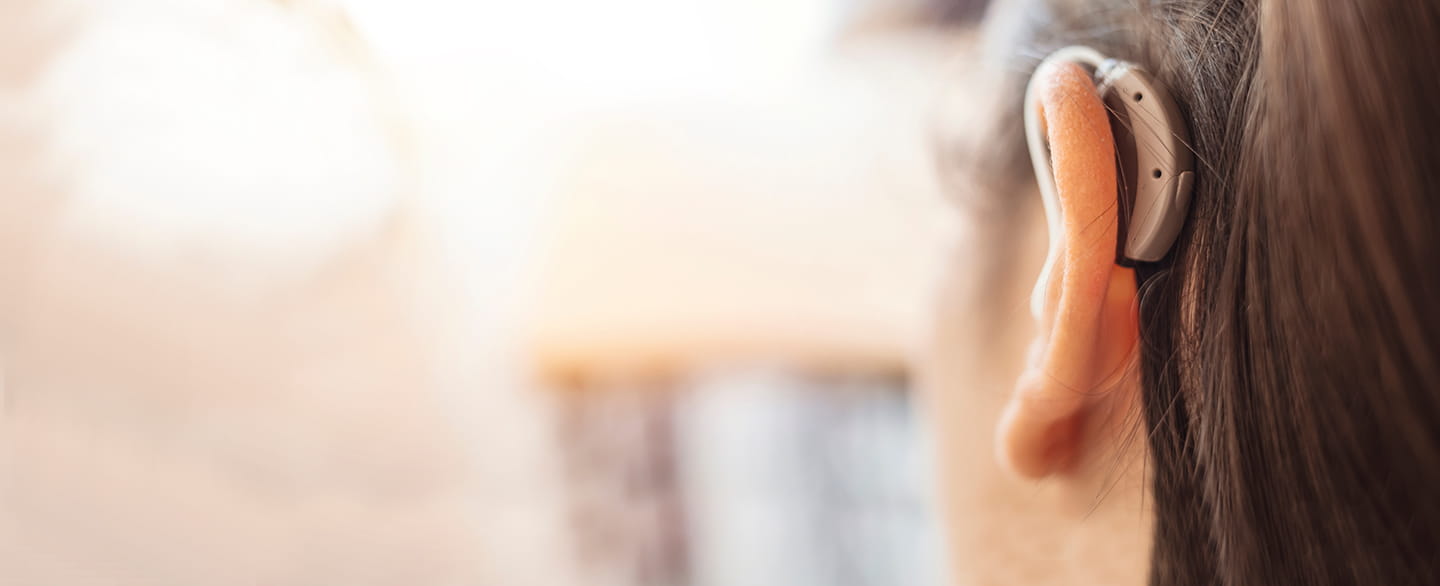
Audiology is the area of medicine concerned with hearing and balance and other related disorders. At The University of Kansas Health System in Kansas City, our audiologists help people of all ages with hearing loss and other audiological conditions.
We offer a variety of appointment types. Learn more or call 913-588-1227 to schedule now.
About audiology
Audiological conditions can be related to the central auditory nervous system (CANS) or to the ears (peripheral hearing system). Conditions related to the CANS are treated by our audiologists who work with our neurology care team. Conditions directly related to the ears are treated by our audiologists who work in otolaryngology – ear, nose and throat (ENT) care.
Neuroaudiology
Audiological disorders related to the CANS may include hearing loss, tinnitus, dizziness or auditory processing disorders. They specifically impact the auditory areas of the brain, cognitive impairment related to concussion, effects of aging, dementia, Alzheimer’s disease or other central conditions affecting the central auditory system. The neuroaudiology care team treats people of all ages, beginning with newborns.
Ear, nose and throat audiology
ENT audiology care encompasses diagnosis and medical, surgical or nonsurgical treatments of sensorineural, conductive or mixed hearing loss, as well as sudden or asymmetrical hearing loss. Our ENT audiology care team treats patients beginning at 6 months of age.
Common audiological conditions
Hearing loss is the most common audiological condition and has many causes. More than 50 million Americans have experienced some sort of hearing loss. Advances in technology mean people have more options to treat their hearing loss. There are 3 main types of hearing loss:
Sensorineural hearing loss (SNHL) is permanent hearing loss that is caused by damage to the inner ear or auditory nerve. SNHL can occur in children and adults. In children, it often results from inner ear abnormalities, genetic variations or viral infections from the mother during pregnancy. In adults, common causes include aging, exposure to loud noises and head trauma.
Conductive hearing loss is a treatable form of hearing loss that occurs in children and adults when sound that moves through the external ear or middle ear is blocked and does not reach your cochlea, the hearing part of the inner ear. This can result from earwax buildup, fluid in the space between your ear drum and cochlea or a punctured eardrum. Fortunately, most cases of conductive hearing loss can be treated with medication and/or surgery.
This is a combination of sensorineural and conductive loss.
Tinnitus (TIN-uh-tus or tin-EYE-tus), or ringing in the ears, affects more than 50 million people in the US and may occur with or without noticeable hearing loss. Tinnitus is not a disease, but a common symptom. Because it involves the perception of hearing sound or sounds in 1 (unilateral) or both ears (bilateral), it is frequently associated with the hearing system.
Most tinnitus related to noise and/or hearing loss presents as a high-pitched tonal ringing sound. Many people describe it as a cicada noise. This type of tinnitus is often improved with amplification or sound therapy.
Unilateral tinnitus may reflect noise damage to a single ear or indicate an underlying medical condition related to the hearing organ or nerve. You should have unilateral tinnitus evaluated to rule out the possibility of tumor development or other medical conditions that may be treatable.
Most tinnitus can be heard any time a person thinks about it, especially when it's quiet. A common form of tinnitus occurs in brief bursts – less than 60 seconds – and may be accompanied by a feeling of fullness in the ear. This is somatic tinnitus and if it occurs frequently, it can be improved by addressing underlying issues with your teeth or jaw, eustachian tube or head and neck.
Sensitive hearing
A hearing disorder often associated with tinnitus is hyperacusis, or sensitive hearing. People can have tinnitus and hyperacusis at the same time. Hyperacusis is when people have a hard time tolerating sounds that are typically not loud to others. These include noise from running water, traffic or riding in a car, walking on leaves, shuffling papers or running the dishwasher or other machines. High frequency sounds, such as whistling, infant cries and bird chirps, may be particularly troublesome.
While many people experience sensitivity to sound, true hyperacusis is rare, affecting approximately 1 in 50,000 people. It can affect people of all ages in one or both ears.
Prior to any treatment, it is important to undergo a thorough examination and evaluation by an ENT (ears, nose, and throat) specialist, or otolaryngologist, and an audiologist. Your understanding of tinnitus and its causes will enhance your treatment.
Audiology services
Services offered by the neuroaudiology care team include the evaluation of:
- Auditory hallucination
- Auditory processing disorder
- Dizziness
- Hearing and balance disorders related to concussion or mild traumatic brain injury
- Hearing for all ages, including hard-to-test individuals
- Newborn hearing, including auditory brainstem response
- Ototoxicity – hearing or balance problems caused by a medication – and other medication-related injuries
- Sound intolerance conditions such as hyperacusis, a disorder in loudness perception, and misophonia, a condition that triggers a strong reaction to common sounds
- Tinnitus – ringing in the ears
Services offered by the ENT audiology care team include the evaluation of:
- Age-related hearing loss
- Asymmetrical hearing loss
- Bone-anchored implant candidacy
- Cochlear implant candidacy
- Dizziness
- Ear pain, discharge or infection
- Hearing, ages 6 months and up
- Mixed or conductive hearing loss
- Sudden hearing loss
The neuroaudiology and ENT audiology care teams have full vestibular testing capabilities to test balance and dizziness. These tests include:
- Auditory brainstem response (ABR): An ABR test checks how the hearing nerve responds to sound. It lets the audiologist know how the inner ear and the brain’s hearing pathways are working.
- Electrocochleography (ECochG): ECochG is a technique used to record electrical activity generated by the cochlea (inner ear) and the auditory nerve in response to sound.
- Rotary chair: Assesses the vestibulo-ocular reflex, the involuntary motion of your eyes that stabilizes vision when your head moves. You wear video goggles and a variety of slow rotational tests are performed with the motorized chair.
- Vestibular-evoked myogenic potential testing (VEMP): This is used to measure the integrity of both branches of the vestibular nerve including vestibular end organs and central connections. The test uses surface electrodes and sound stimuli in the ear canal.
- Video head impulse testing (vHIT): This test measures the function of the 6 semicircular canals – the tiny, fluid-filled tubes, 3 in each ear, that help you keep your balance.
- Videonystagmography (VNG): Tests performed using video goggles to determine whether dizziness is caused by the inner ear. It measures eye movements while you move your head, eyes and body to different positions.
Audiology treatments
Our audiologists have experience you can trust to provide the right treatment for your audiological condition. Treatments for different types of hearing loss and other disorders are available from our neuroaudiology and ENT audiology specialists. Treatments include:
- Canalith repositioning maneuvers to treat benign paroxysmal positional vertigo
- Fitting and instruction for traditional and over-the-counter hearing aids for all ages
- Selection and fitting of custom hearing protection, musicians filtered ear plugs and swimming plugs
Neuroaudiology services include:
- Auditory training therapy, which helps people with hearing loss improve their listening skills and speech understanding
- Selection and fitting of assistive listening technologies and safety or alerting systems
- Sound therapy for tinnitus and hyperacusis
ENT audiology services include:
- Bone-anchored implant programming for all ages
- Cochlear implant programming for all ages
Why choose us for audiology
All our audiologists have earned a doctorate in audiology – so you can be assured of receiving the latest, leading-edge care, treatment and devices. We help people of all ages improve their quality of life and overcome the consequences of hearing loss, tinnitus and dizziness.
Our audiologists
Neuroaudiology audiologists
- Cole Campbell, AuD, CCC-A
- Mallory Miller, AuD, CCC-A
- Isabelle Moreland, AuD, CCC-A
- Anjelica Pearson, AuD, CCC-A, F-AAA
ENT audiologists
- Madison Braun, AuD, CCC-A
- Kristina Broyles, AuD, CCC-A
- Kristina Fletcher, AuD, CCC-A
- Anna Grashoff, AuD, CCC-A
- Rachel Koehler, AuD, CCC-A
- Lindsay Lad, AuD, CCC-A
- Kelly Malcolm, AuD, CCC-A
- Rachel Murphy, AuD, CCC-A
- Amy Nunnelee, AuD, CCC-A
- Katie Plum, AuD, CCC-A
- Kelly Schmidt, AuD, CCC-A
Frequently Asked Questions
An audiologist is a medical professional who specializes in evaluating and assisting adults and children of all ages with hearing loss. Audiologists have graduate school training and specific education dealing with hearing aids. At The University of Kansas Health System, our audiologists are licensed by the state of Kansas and certified by the American Speech and Hearing Association.
By conducting a variety of tests, an audiologist can determine the type and degree of an individual’s hearing problem and present treatment options to people with hearing impairment.
Audiologists also dispense and fit hearing aids, administer tests of the balance system to evaluate dizziness and provide hearing rehabilitation training.
People are referred to otolaryngologists when the hearing problem needs medical evaluation or surgical intervention.
More than 50 million Americans have some type of hearing loss. The most common causes of hearing loss are damage to the sensory cells due to noise or trauma, disease and aging. Impacted wax or ear infection may also cause a temporary hearing loss.
Our audiologists can help determine the type and degree of hearing loss through a complete diagnostic hearing evaluation in our office.
Treatments for hearing loss often include medication, surgery and the use of hearing aids. Our audiologists and physicians work closely together to help educate patients about their options so they can make an informed decision.
The first step in treating a hearing problem is a hearing evaluation by an audiologist. You should schedule an appointment with one of our audiologists if you suffer from any of the following symptoms:
- Ringing or buzzing noise in the ears
- Difficulty hearing or understanding
- Dizziness
- Ear pain
Your child should see us if they are experiencing:
- Delayed or poor speech development
- Frequent ear infections
- Hearing loss
Using the most advanced computerized procedures we provide complete hearing aid services to patients with hearing problems. We offer a wide variety of custom fit hearing aids. Sizes vary from the behind-the-ear units to the nearly invisible completely-in-the-canal style.
Yes. We can test hearing and identify hearing loss in children of any age. This includes newborn and infant hearing testing using otoacoustic emission testing, visual reinforcement audiometry and play audiometry.